- Published on
OpenSats' 2025 Year in Review
- Authors

- Name
- Gigi
- @dergigi

- Name
- OpenSats
It's January 3rd as I'm writing these lines. Genesis day. Bitcoin's 17th birthday. It's curious that Bitcoin's birthday lines up with the start of a new year: a time to reflect, a time to look back at the year that has passed.
The little thing that Satoshi launched into the world is not so little anymore. Not fully grown up, but also not a kid anymore. A teenager. More successful than most teenagers, but still a teenager.
So: where are we in terms of Bitcoin's development? There's the obvious part and the not-so-obvious part. Let's do the obvious first: Nation states hold BTC on their balance sheets. Serious people with serious suits and serious companies talk about it on TV, in a non-dismissive (serious) way. If you bring it up in conversation you don't get laughed out of the room anymore. While most people have heard of Bitcoin by now, it is probably fair to say that for the vast majority contact was peripheral and understanding superficial. Consequently, only a small percentage use it in a self-sovereign way. In absolute terms, however, the number is growing. The mainstream association now seems to be squarely in the "asset" and "digital gold" quadrant, as opposed to "speculation" a couple of years ago, or gambling and shady internet money used exclusively for questionable things before that.
Now to the not-so-obvious part: Bitcoin is still alive. It has operated for seventeen years, mostly quietly, mostly in the background. A new block has been mined every 10 minutes. Over 900,000 blocks since genesis, moving trillions of sats in the process. The cumulative hash rate of the network hit an all-time high: a number so unfathomably large that it's almost impossible to put into perspective. Lightning liquidity hit an all-time high too, and so did the number of merchants accepting bitcoin as a form of payment. It's now easier than ever to live on a bitcoin standard, thanks to countless open-source projects and the services that build upon them. Bitcoin gets more efficient, resilient, and useful by the day. From basic research to fuzz testing to Stratum V2 to Silent Payments to Splicing to open-source tools for merchants and users, OpenSats is funding a myriad of efforts across the stack to support Bitcoin through its teenage years.
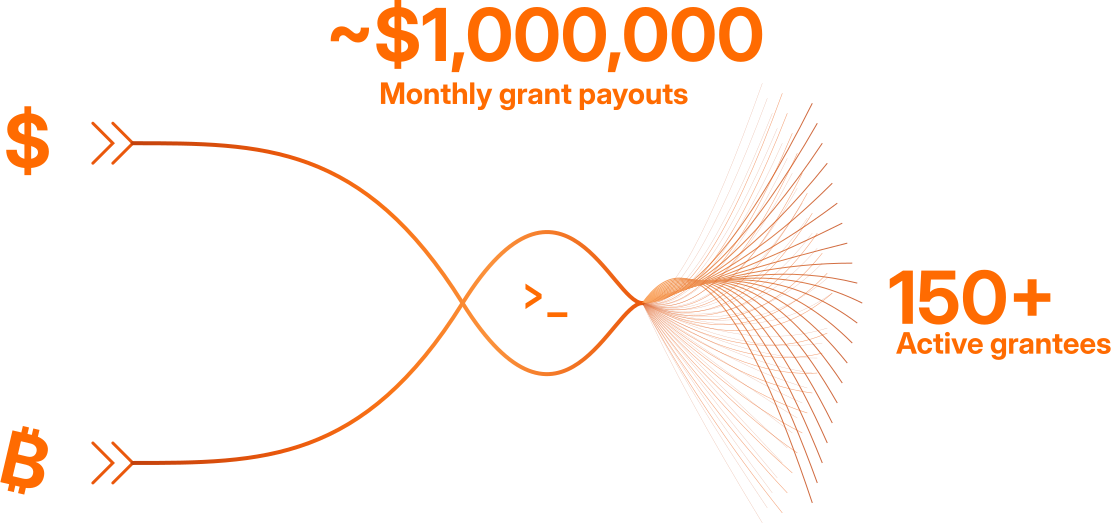
Each month, over the last 18 months, we've sent roughly $1,000,000 USD worth of sats to grant recipients in 40+ countries. During the course of 2025 we supported more than 150 active grantees at any point in time: small teams, large teams, educational efforts, and—most importantly—individual developers.
When we reach out to our grantees about progress, we ask three simple questions: How did you spend your time? What are your plans for next quarter? How did you use the funds? We also follow it up with a fourth: Is there anything we could help with?
As we look back at 2025, it is now our turn to answer these questions.
Announcements
How did you spend your time?
Our mission is simple: we want to support and maintain a sustainable ecosystem of funding for free and open-source projects and contributors, especially Bitcoin-related projects and projects that help Bitcoin flourish. Our day-to-day operations thus consist of the following: receiving grant applications, evaluating grant applications (in terms of scope, technical feasibility, clarity, potential impact, and scalability), doing due diligence, and arriving at a final decision through majority vote. We want to support the best projects and people. At the same time, we want to avoid wasting donor funds, which is why we keep a close eye on our grantees to make sure that progress goals and agreed upon milestones are hit. And last but not least, we are spending our time on long-term donor relationships and fundraising efforts. After all, we can only support as many grantees as we do if there are sats in our vaults.
We announce all our grants publicly on our blog, along with our initiatives and larger donations. Looking at the announcements made in 2025, one should get a pretty good idea of what we've been up to: In January 2025 we announced additional grants for Bitcoin Core contributors, followed by a wave of bitcoin grants announced shortly after. In February we published our first impact report: Advancements in On-Chain Privacy. In March we announced the 10th wave of grants from the General Fund as well as the 10th wave of grants from The Nostr Fund. We also published "Let a Thousand Flowers Bloom," outlining our thesis on how to best scale OpenSats horizontally.
In April we announced our 4th wave of education grants, followed by another wave of nostr grants and our next impact report: Advancements in Lightning Infrastructure. In May we announced yet another wave of grants (and grant renewals) from our General Fund.
June marked the release of our third impact report, Advancements in Developer Training, highlighting progress of some of the developer-focused education initiatives we fund: Summer of Bitcoin, Africa Free Routing, Bitcoin Dev Launchpad, and Bitshala. We also announced our long-term support for SnowCait, a prolific nostr developer. In July we announced the 12th wave of grants from the General Fund as well as the Nostr Fund, respectively.
In August we published yet another impact report: Advancements in Developer Libraries. We fund a lot of projects that are invisible to the end-user. Software development kits and libraries such as BDK, rust-bitcoin, Payjoin Dev Kit, DLC Dev Kit, libraries focused on secp256k1, and many others are critical to Bitcoin infrastructure projects. Developing and maintaining these libraries is hard and often thankless, but foundational to a flourishing Bitcoin ecosystem. As one of our grantees Tobin Harding succinctly put it: "My job is to provide libraries so other devs can create software that users love. If no one ever mentions rust-bitcoin while simultaneously using it every day, then we win." Our 13th wave of grants, also announced in August, showed our commitment to those infrastructure-like software projects: Tor, DTails, and ngx_L402 are all pieces of the larger freedom tech picture.
In September we highlighted what advancements our grantees made on the ecash front: Cashu, CDK, Nutshell, Minibits, Nutstash, npub.cash, Hashpool, Fedimint, and OpenCash. We believe that Chaumian ecash has a large role to play in Bitcoin's future, and are proud to support the people and projects who are pushing this technology forward.
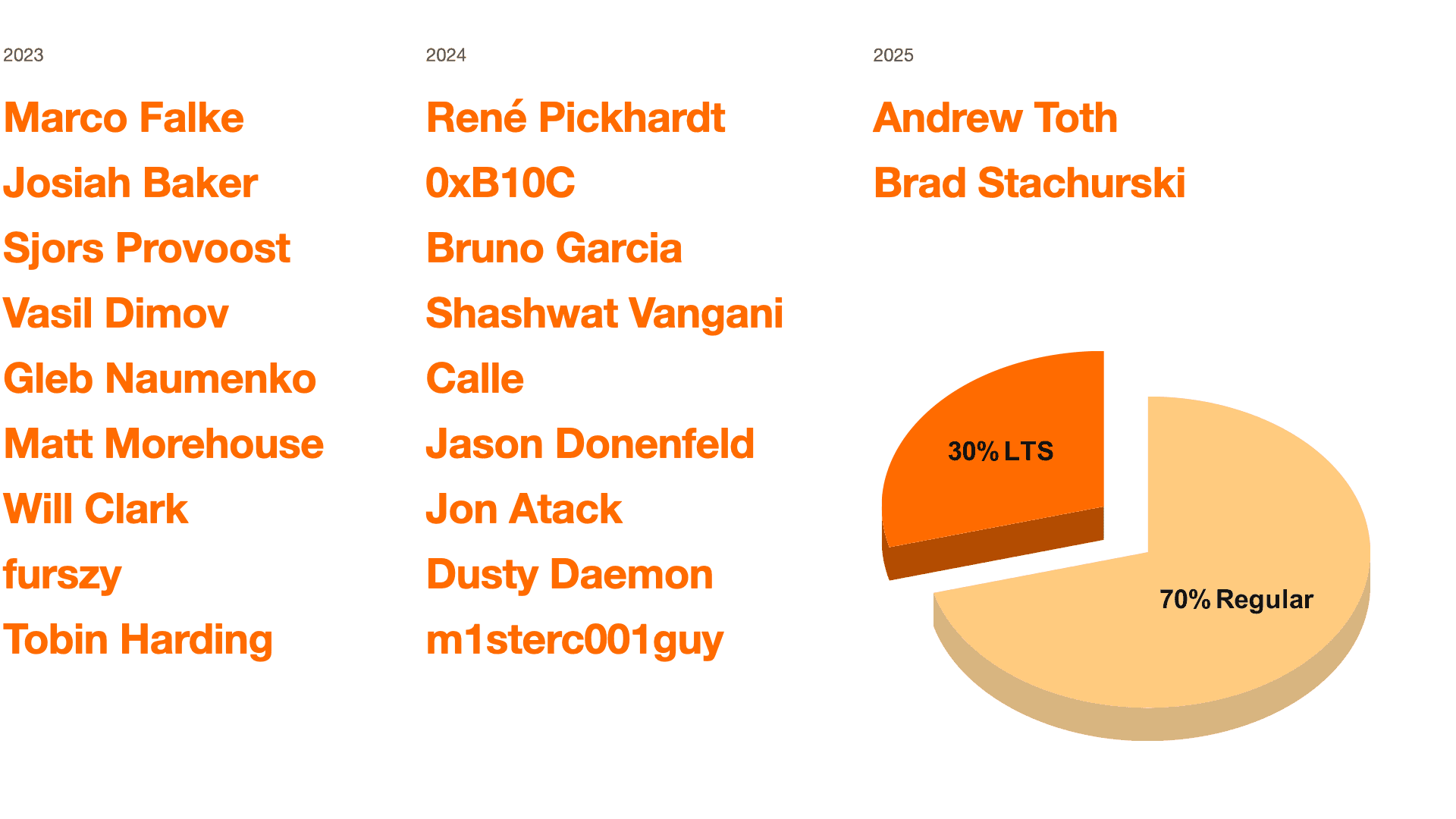
In October we announced the 14th wave of grants from our General Fund, followed by an impact report on the Advancements in Bitcoin and Lightning Wallets. In November we published the 13th wave of nostr grants, and we concluded the year in December with the announcement of the 14th and 15th waves respectively, as well as our first impact report focusing on the nostr ecosystem: Advancements in Nostr Clients. On the last day of the year we announced our long-term support for Brad Stachurski, who was the 2nd LTS recipient in December, following Andrew Toth.
Allocation
How did you use the funds?
OpenSats exists because we want to see contributors to Bitcoin and free and open-source tools supported by a sustainable ecosystem and consistent funding. Our LTS program (long-term support) aims to do just that: support the best people for a multi-year period. Consequently, a lot of our funds are dedicated to our LTS grantees.
Since the introduction of our grant program in July 2023, we have allocated over $20,000,000 from the General Fund and over $10,000,000 from The Nostr Fund to open-source projects.
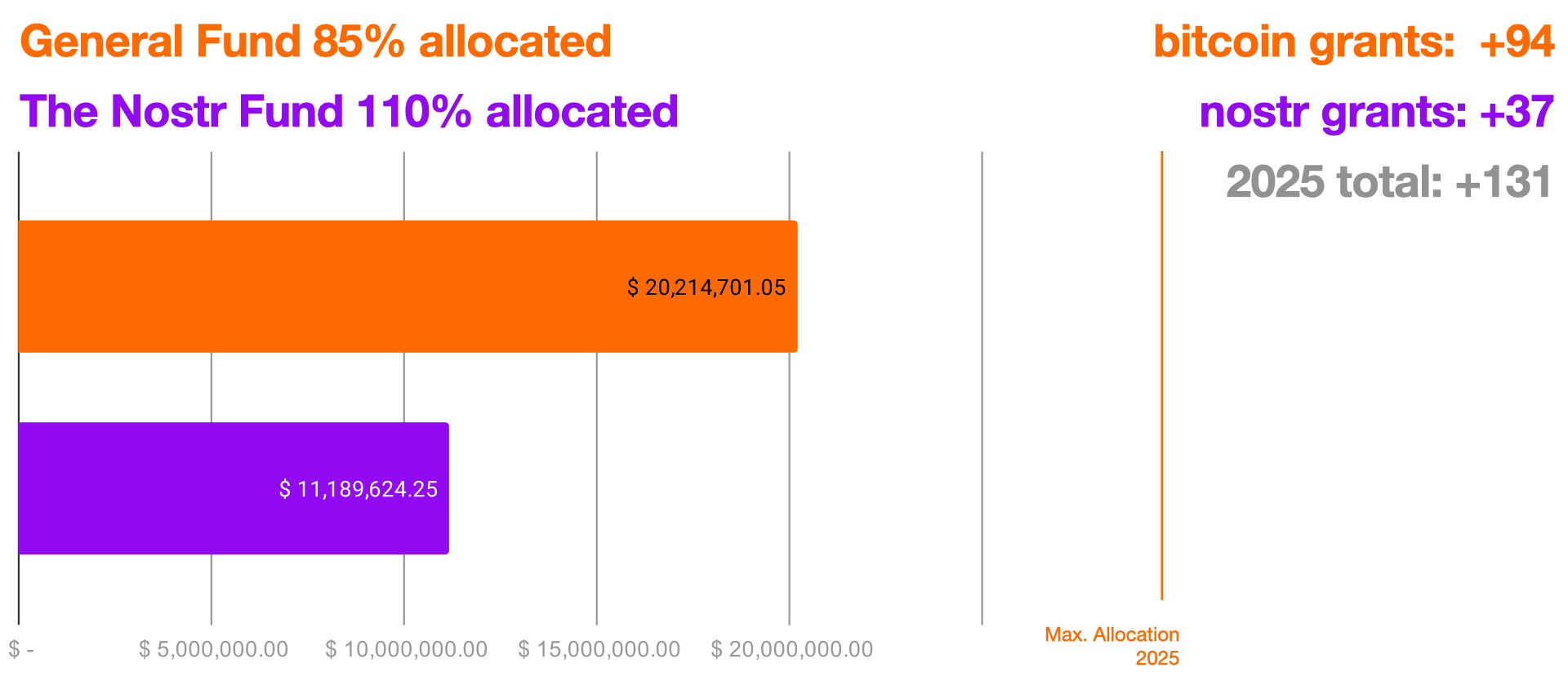
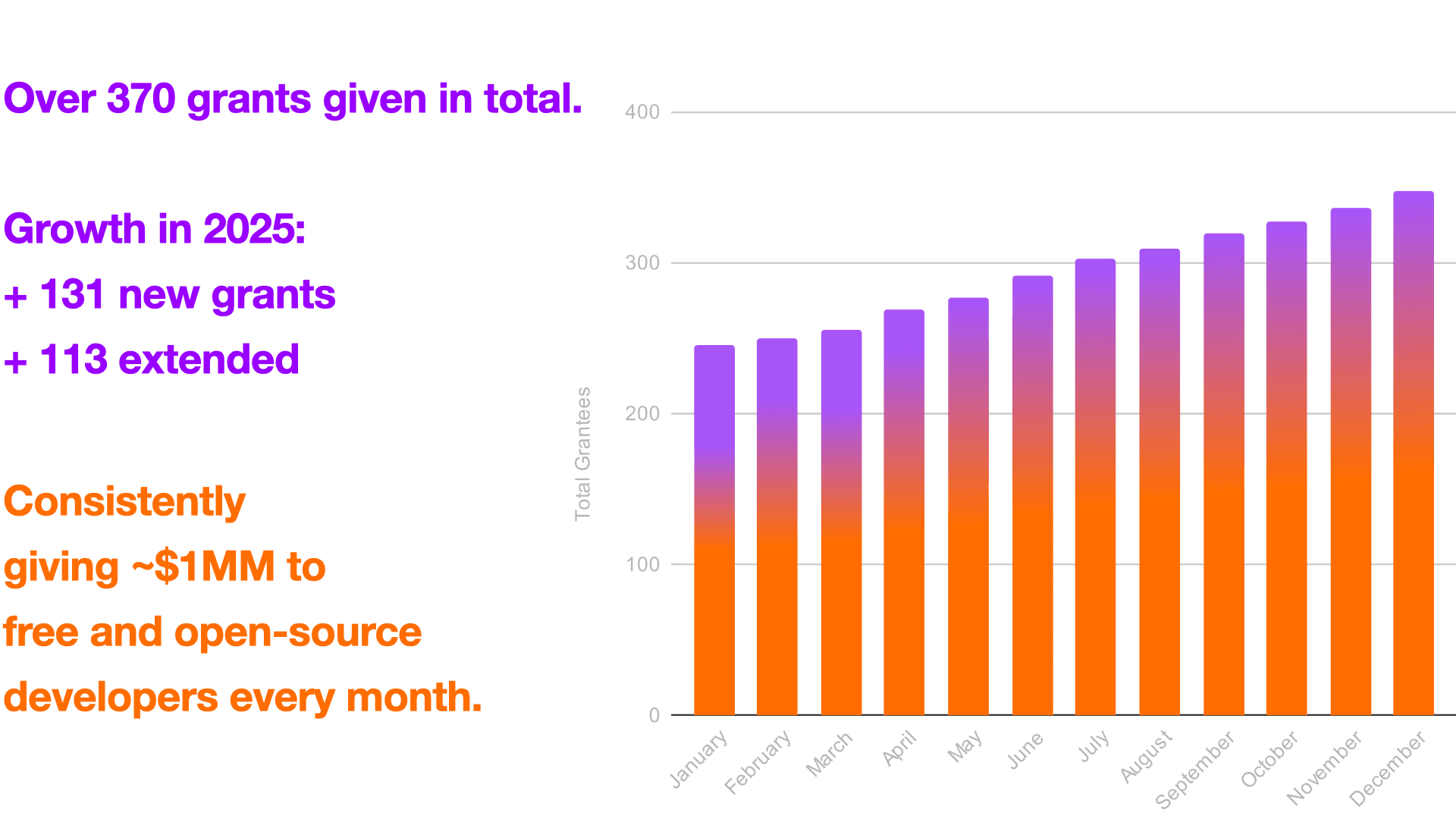
Our grantee growth remains consistent, with about a dozen new grants awarded every month across both funds.
Bitcoin: General Fund
In 2025, we allocated a total of $2,328,000 from our General Fund to long-term support. We allocated twice as much to non-LTS grants, with a total of $5,639,789 allocated towards various projects, as per our announcements. In total, we have now given over 370 grants since launching our grant program in 2023.
In terms of allocation percentage, the ratio of LTS grants to regular grants is the same as the previous year, with a clean 30/70 split. In terms of focus areas the list is similar too, with an increased emphasis on developer libraries and ecash.
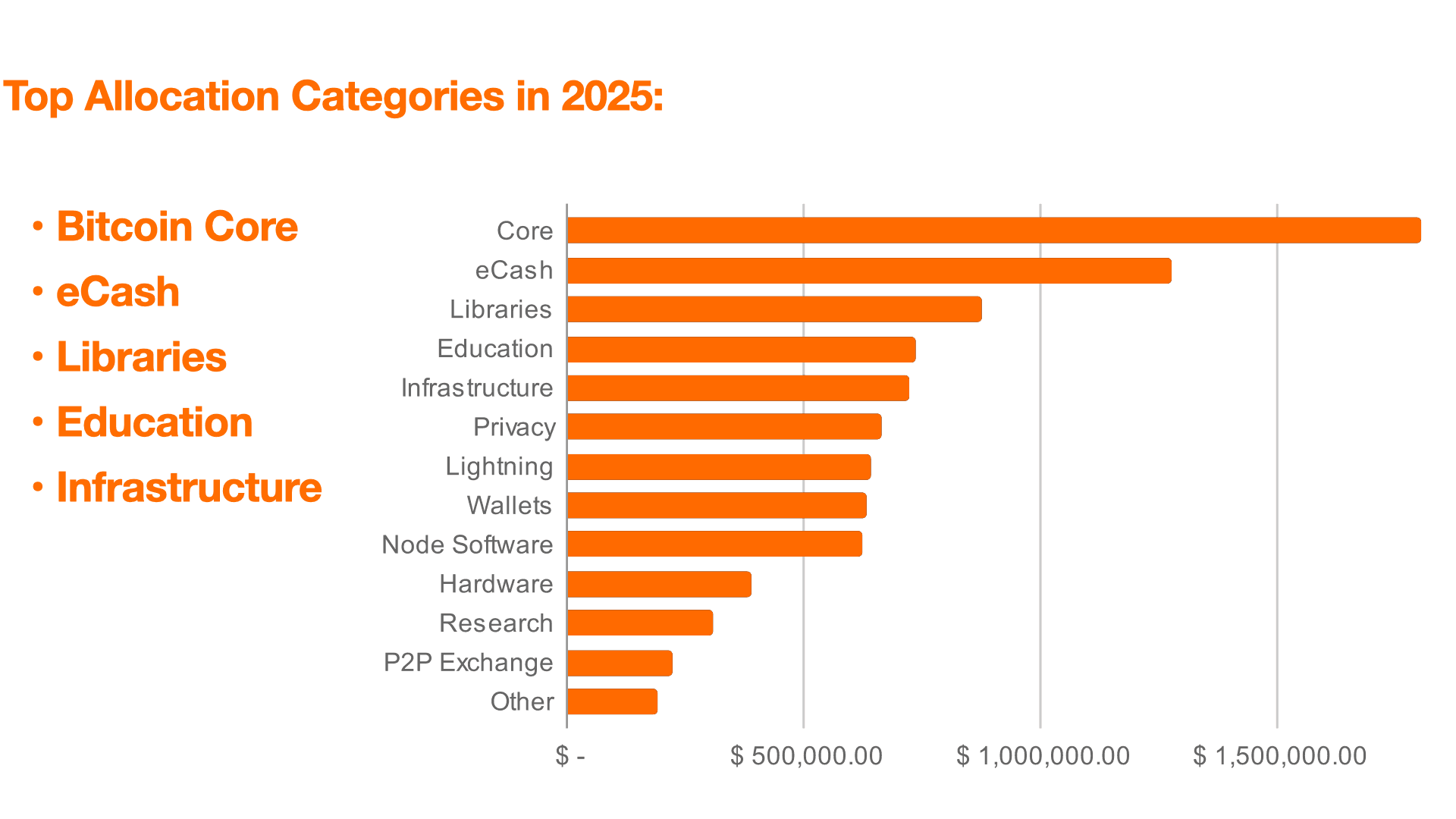
As mentioned before, we are currently sending approximately $1 million worth of bitcoin to our grantees each month. Thanks to the power of magic internet money we can do this with minimal overhead and near-instant settlement—regardless of where our grantees are located. As of this writing, our grantees span over 40 countries:
In total, OpenSats has allocated $21,646,000 USD to free and open-source projects and sent ~24.6 billion sats to 252 grantees in 40 countries.
Nostr: The Nostr Fund
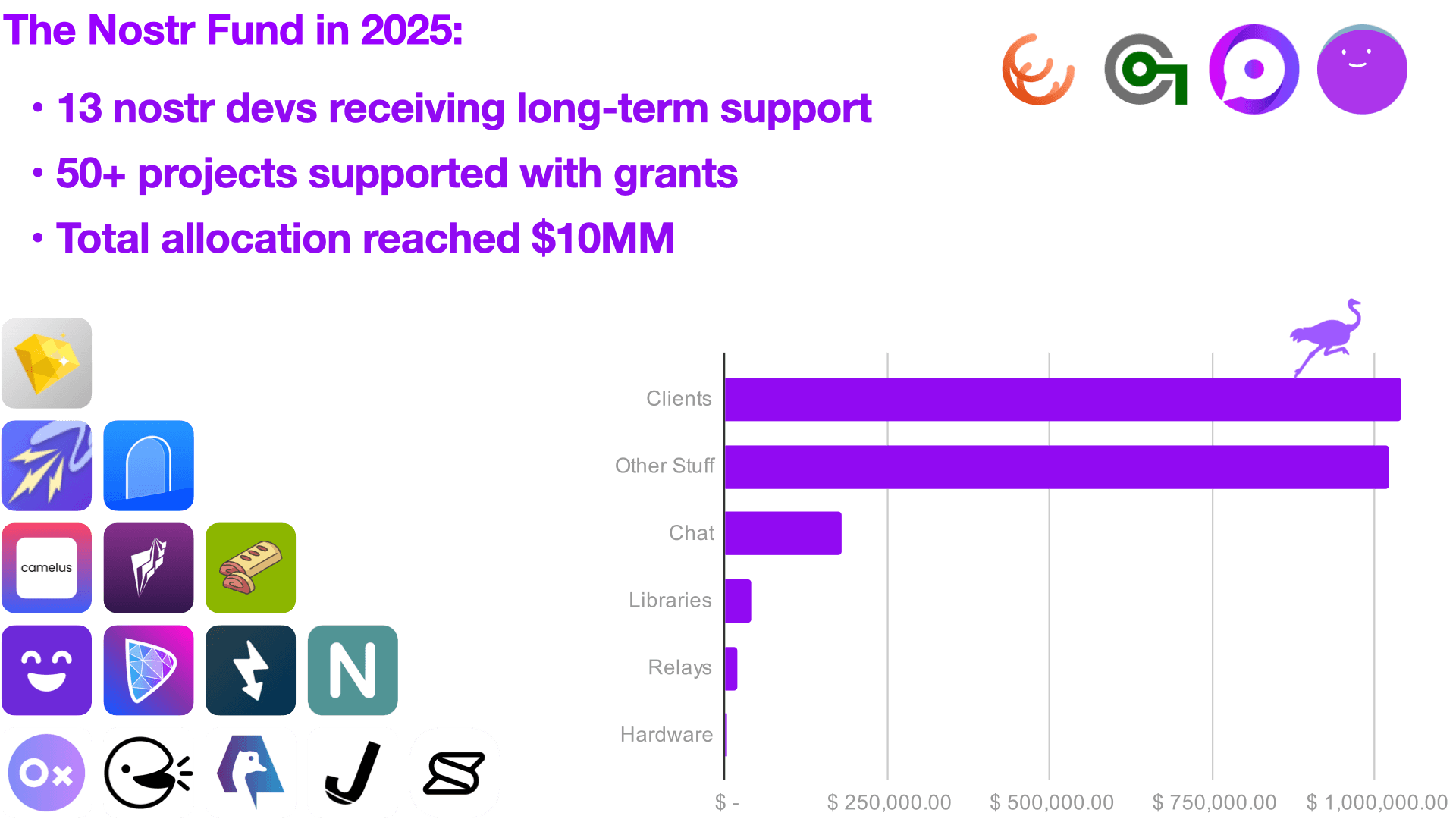
On the nostr side, our allocation is very similar to last year: around 35% of The Nostr Fund is allocated towards our LTS grantees: Pablo, Stuart, hzrd149, Will, Yuki, Hodlbod, fiatjaf, Kieran, Vitor, Daniele, Alex, Greenart, and SnowCait. In addition to these LTS grants we gave grants to the following nostr projects this year: Aegis, Atomic Signature Swaps, Bigbrotr, Chachi, Frostr, Gitplaza, Grasp, HAMSTR, HyperNote, Jumble, Keydex, Nostr Double Ratchet, Nostr Epoxy, Nostr Feedz, Nostr Game Engine, Quartz, Swae, Vertex, YakiHonne, ZapTracker, and Zapstore. We also renewed grants for 0xchat, Camelus, Coop, Damus, Dart NDK, futr, nostr-relay, Notedeck, Nostr Safebox, Nostromo, Nostroots, and Npub.cash. In terms of allocation percentage, about half of the funds went towards client development, with the other half going towards "other stuff."
You can read more about these projects in our grant announcements from March, April, July, November, and December.
Donations
Is there anything we could help with?
We have been deeply humbled by the unfailing generosity of our donors, and 2025 was no exception. The biggest donation was a $2,000,000 gift from the Reynolds Foundation as announced in May, followed by a $400,000 donation from StarkWare and the Starknet Foundation as announced in November. Further, we are grateful to have received a commitment from Steak 'n Shake and a $250,000 donation from Tether, as announced in October.
Since we don't take a cut from donations designated for open-source development, we are incredibly grateful to have received additional operational budget from the Human Rights Foundation, as announced in February 2025 (and again in January 2026). Our operational budget is what allows us to keep the lights on, covering operations and contractor expenses, legal and compliance fees, software and services, as well as exchange and transaction fees. The financial statements on our transparency page go into more detail in regards to our operational expenses. Our operational expense in 2025 was roughly 6% of the total expense of our grant programs.
In total we received 674 donations in 2025 totaling $3,158,680. The majority of these donations were made via the Lightning network, which is a trend that we observed last year already, especially when it comes to smaller donations. Some of our supporters use OpenSats as a target for zaps and streaming payments, which is something we love to see. Refer to our FAQ if you're curious about how to set this up.
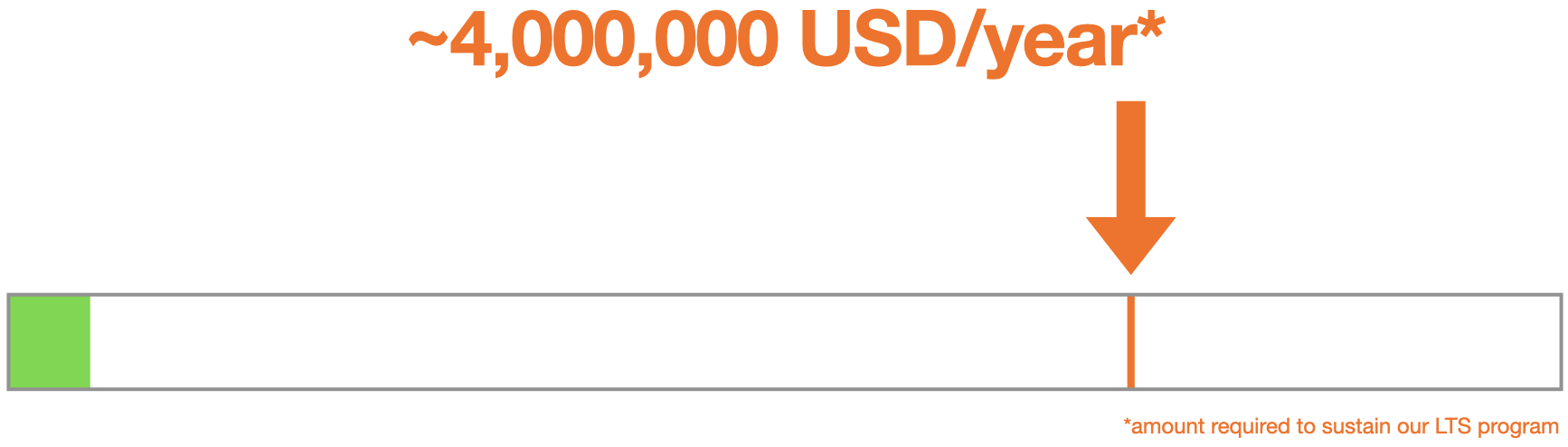
As mentioned in our mission statement, OpenSats is a 501(c)(3) public charity that aims to support and maintain a sustainable ecosystem of funding for free and open-source projects and contributors, especially Bitcoin-related projects and projects that help Bitcoin flourish. In other words: we want to continue to offer long-term support for load-bearing internet people, providing at least some stability in an otherwise uncertain world. Providing this stability depends on substantial and continual funding. We can only continue to give grants if there are enough sats in our vaults, and we can only give multi-year grants to exceptional people and projects if we receive recurring donations.
The dream is to have OpenSats supported by the public, i.e. the millions of users who benefit from advancements made in the open-source ecosystem that is the freedom tech movement. We are a long stretch away from that goal, but we're confident that we'll be able to make substantial progress towards it in the next couple of years.
Bitcoin is a multi-decade endeavor, and as mentioned in the beginning, is barely 17 years old. We are still at the very beginning of this transition. A transition into a world that empowers the individual to have more sovereignty—financial or otherwise. The cypherpunks understood that free- and open-source code is a powerful gateway to freedom, and we want to support those who create and maintain that code. That is the mission of OpenSats: support and maintain a sustainable ecosystem of funding for free and open-source projects and contributors. Especially those that help Bitcoin flourish.
We can only do it with your help, and we are grateful for every sat that comes our way.
Outlook
What are your plans for next quarter?
That one is easy. We want to keep doing what we're doing, which is to send billions of sats to hundreds of projects, month after month, year after year. In 2025, our board and committee members made 2,821 application evaluations—a herculean volunteer effort. We want to continue to provide the infrastructure necessary to support the best and brightest. Those who are aligned with our mission, who care about financial freedom and the future of the internet as much as we do.
We will continue to publish impact reports, highlighting what our grantees have been working on and how OpenSats funding is contributing to the progress that we see across the freedom tech landscape. In 2025 alone, the progress reports we received referenced 10,904 pull requests—a testament to the output of our grantees. In addition to our impact reports we want to work towards publishing a quarterly newsletter, highlighting some of the projects we fund as well as the progress that is being made. If you're interested in helping with this endeavor, please reach out to jobs@opensats.org.
Last but not least, we want to get better at outreach and outward communication. There is a large pool of developers that do not know about OpenSats and the wider freedom tech movement. Further, there are many adjacent communities that are working to solve similar problems but dismiss Bitcoin (or nostr) for various reasons. Some of these barriers are ideological, others are rooted in culture and language. While we won't be able to convince everyone that Bitcoin is worth their time, we are convinced that outreach, communication, and the inevitable cross-pollination of ideas that follows it, are worthwhile efforts.
Our focus is unchanged. We believe that free and open-source software is essential to the future of the internet and the world. We want to fund software that allows people to collaborate and share knowledge, without being locked into proprietary solutions. We are committed to supporting the development of free and open-source software, and we believe that Bitcoin has the potential to change the world. If you care about freedom tech and how it can help to not only fix the money—but fix the world—consider supporting us in pursuit of our mission.
We are incredibly grateful for all the support we received in 2025, and we will do our best to carry this momentum into the following year. The progress our grantees have made is astounding, and we are convinced that the compounding effects of all the libraries, tools, SDKs, and general software that is being shipped will pave the way for a future that has more freedom, fairness, liberty, sovereignty, and stability.
Onward!